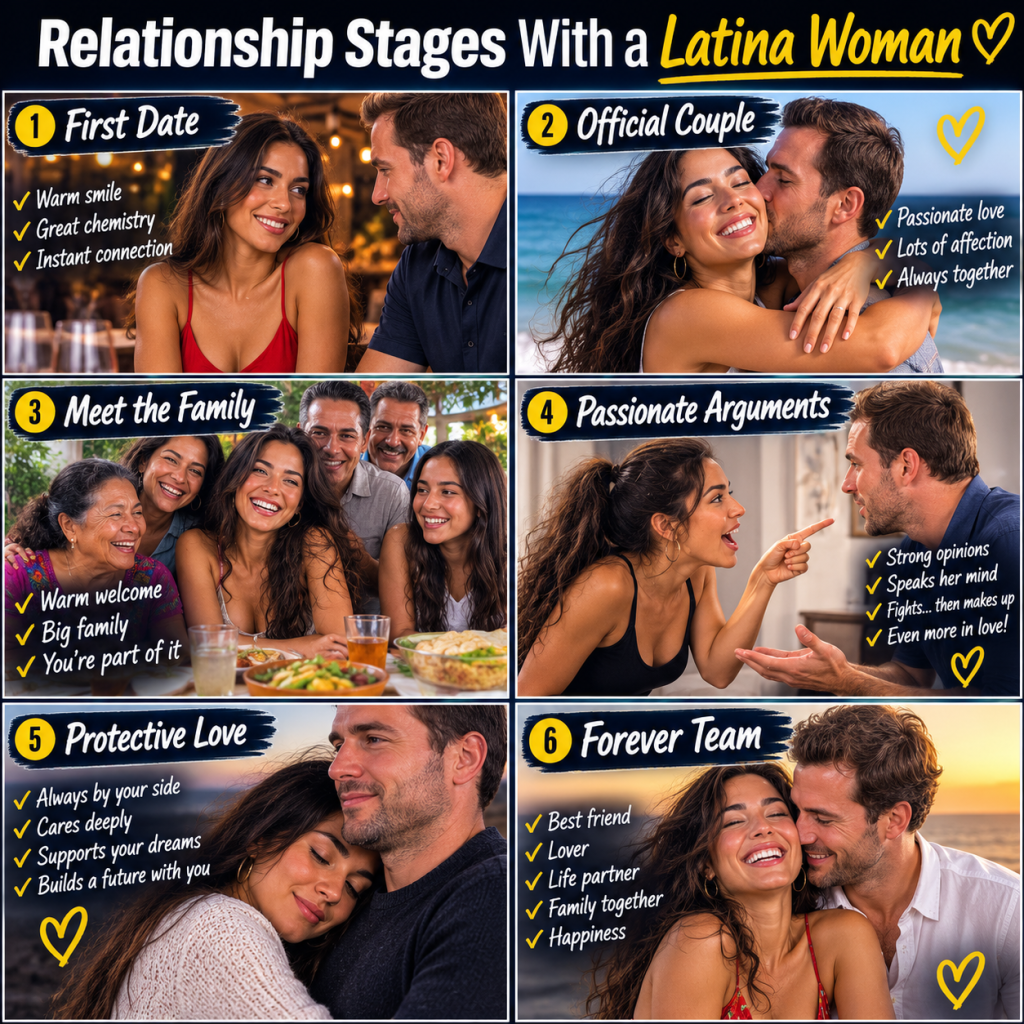
Relationships with Latina women tend to move through recognizable stages that are worth understanding in advance rather than discovering by surprise, because the pace, the expectations, and the meaning of each stage in Latin American dating culture often differ meaningfully from what Western men are accustomed to. Understanding what each stage involves and what it signals helps you navigate the relationship with more genuine attentiveness and considerably less confusion about where things actually stand.
Stage One: First Contact and Initial Connection
The first contact phase — initial messages, early conversations — tends to move fairly quickly in Latin American dating culture once genuine mutual interest has been established. The warmth and expressiveness that characterize Latin social culture means that conversations tend to develop faster and with more visible enthusiasm than in more reserved cultural contexts. This pace is genuine rather than performed, but it requires calibration: the warmth of early contact reflects real interest and real social expressiveness, but it is not the same as deep compatibility or commitment, and Western men who mistake early warmth for established intimacy tend to move faster than the relationship has actually developed.
Video calls should be established early — within the first few weeks of genuine conversation. They serve both practical verification purposes and genuine connection purposes, since the expressiveness that is one of the most compelling features of relationships with Latina women translates considerably better over video than through text alone.

Stage Two: Building Genuine Connection
The genuine connection phase is where the relationship develops from initial contact into something with real substance — where both people have begun to know each other specifically rather than just enjoying the energy of a new connection. This phase is built through consistent communication over time, genuine curiosity about each other’s actual lives rather than performed interest, and the gradual sharing of more personal dimensions of each other’s experience.
Family tends to appear in conversation during this stage — she will begin sharing information about her family, and how she describes them tells you a great deal about what her family world actually looks like and what it will eventually require from you. Showing genuine interest and warmth in how you respond to these conversations, rather than treating family content as background information, communicates the kind of long-term seriousness that Latina women tend to be looking for.
Stage Three: The First In-Person Meeting
The first in-person meeting is the moment the online relationship gets tested against physical reality, and it deserves genuine preparation rather than being treated as logistics that will sort themselves out. Arrive with realistic expectations — the first meeting almost always involves some degree of adjustment between the image built through screens and the actual person in three dimensions, and giving the relationship time to find its in-person footing rather than treating any initial awkwardness as a verdict tends to produce better outcomes.
Meeting her family, or at least some family members, often happens during or shortly after the first visit in Latin American cultural contexts — earlier than Western men typically expect. Being prepared for this, approaching it with genuine warmth, and treating it as a meaningful positive development rather than premature pressure reflects an accurate understanding of what the meeting actually signals.
Stage Four: Commitment and Family Integration
The committed relationship stage in Latin American dating culture tends to be more explicitly marked and more formally acknowledged than in many Western contexts. The relationship’s status is understood by both parties and typically by the family — the ambiguous “we’re seeing each other” phase that some Western dating cultures sustain indefinitely tends to be shorter in Latin American contexts before both parties and their families expect clarity about what the relationship actually is.
Family integration deepens during this stage — participation in family occasions, genuine relationships with her parents and siblings, and a visible presence in the family world that signals the relationship’s seriousness in ways that the family will notice and respond to. A partner who engages genuinely with her family at this stage is communicating the kind of long-term investment that Latin American family culture values most.
What Makes These Relationships Last
The long distance relationships with Latina women that eventually close the distance and develop into genuinely lasting partnerships tend to share certain characteristics that are worth naming because they are consistent rather than circumstantial. Both people brought genuine seriousness about what they were looking for rather than treating the online phase as inherently provisional. The relationship maintained genuine forward momentum — real visits planned and executed, real conversations about the future, real planning around how the distance would eventually close — rather than drifting in an indefinite online holding pattern. Family on both sides was engaged with genuinely rather than managed around as a peripheral obligation.
The cultural differences were treated as dimensions of the relationship worth understanding and navigating thoughtfully rather than as obstacles to overcome on the way to something more familiar. And both people brought genuine curiosity about each other’s actual lives — where she comes from, what her family is like, what her city and country mean to her specifically — rather than a generic interest in Latina women as a category. These qualities are not complicated to describe. They are, however, consistently the ones that make the difference between international relationships that develop into something real and those that never quite get there.
The Bottom Line
Relationships with Latina women move through stages that are genuinely specific — faster initial warmth than Western men often expect, earlier family involvement, more explicit commitment marking, and deeper family integration as the relationship matures. Understanding these stages and what each one requires, rather than applying a Western relationship template to a Latin American context, is what allows these relationships to develop into the genuinely rewarding long-term partnerships they have the potential to be.