The Philippines is one of the most welcoming countries in Asia for Western men interested in international dating, and the reasons go deeper than the language advantage of a country where English is an official language spoken comfortably by most of the educated population. Filipino women combine a warmth and openness that reflects the country’s genuinely hospitable culture with a seriousness about family and long-term commitment that makes relationships with them feel substantively different from the more casual dating cultures of Western countries. Understanding where Filipino women actually come from — their history, their faith, their family structure, their specific expectations in a relationship — is the foundation for any connection that has a genuine chance of going somewhere real.
Geography, Cities, and What They Produce

The Philippines is an archipelago of over 7,000 islands in Southeast Asia, bordered by the South China Sea to the west and the Philippine Sea to the east. The country’s geographic fragmentation has produced genuine regional diversity — women from Manila, the densely populated, cosmopolitan capital on Luzon; from Cebu, the country’s second city and commercial hub in the Visayas; from Davao, the largest city in Mindanao and capital of the predominantly Muslim south; and from the smaller provincial cities and rural areas of the various island groups all reflect meaningfully different environments and, to some extent, different cultural emphases.
Manila and its surrounding metropolitan area is home to around 14 million people and functions as the country’s economic, political, and cultural centre. Women from Manila tend to be more internationally oriented, more career-focused, and more accustomed to navigating between Filipino and Western cultural contexts than women from smaller cities and provinces. Cebu, often called the Queen City of the South, is the Philippines’ oldest city and has its own distinct Cebuano cultural identity that differs from Tagalog Manila in ways that Filipinos take seriously even if outsiders often miss them. Provincial and rural Filipino women tend to hold more traditional values around family structure and gender roles than their urban counterparts, though the difference is one of degree rather than kind across a country that is broadly family-centered regardless of geography.
Religion, Family, and the Centrality of Both
The Philippines is the only predominantly Christian country in Asia, with around 80% of the population Roman Catholic — a legacy of Spanish colonial rule from 1565 to 1898 that left deeper cultural marks in the Philippines than in virtually any other former Spanish colony outside Latin America. This religious inheritance shapes Filipino culture in specific and important ways: family is not just valued but considered a sacred obligation, divorce remains legally unavailable in the Philippines (one of only two countries in the world where this is the case), and the commitment to marriage when it is made tends to be taken with a seriousness that reflects both cultural and religious conviction.
For Western men, understanding this context matters considerably. A Filipino woman who is serious about a relationship is generally thinking about it in long-term, potentially permanent terms from relatively early on, and approaching the relationship with deliberately casual intentions tends to produce a specific kind of hurt that is worth avoiding if you are not in fact serious. Conversely, for Western men who are genuinely looking for a committed long-term partner, this orientation is exactly what they are looking for and tend to find genuinely rewarding.
Family involvement in relationships is deep, early, and genuine rather than performative. Meeting her family is not a milestone that comes after a relationship is established but a natural part of how serious interest is expressed. Her mother’s opinion will carry real weight. Being warmly received by her family — showing genuine interest in them, being respectful toward her parents, participating authentically in family occasions — matters considerably more than any individual romantic gesture you might make toward her specifically.
What Filipino Women Are Like in Relationships
Filipino women are genuinely warm and expressive in ways that reflect the broader Filipino cultural emphasis on smooth interpersonal relations and genuine care for the people in their lives. They tend to be attentive, affectionate, and invested partners who take the relationship seriously once they have decided it is worth their investment. The loyalty that characterizes Filipino relationships at their best is real and consistent rather than performed.
Direct confrontation is generally avoided in Filipino culture — a value sometimes described through the concept of pakikisama, roughly translated as getting along harmoniously with others, which shapes how Filipinos navigate disagreement and difficulty. This does not mean problems go unaddressed, but it does mean they tend to be addressed indirectly rather than through the kind of blunt direct confrontation that some Western relationship cultures treat as healthy. Understanding this cultural default prevents a lot of unnecessary friction and misinterpretation.
Filipino women who are interested in Western men are often attracted by qualities they perceive as more common in Western partners than in Filipino men: willingness to express emotions openly, comfort with female professional ambition, and a more egalitarian approach to partnership. These perceptions are not universally accurate, but they reflect genuine tendencies that Filipino women with international exposure have observed.
Practical Guidance for Western Men
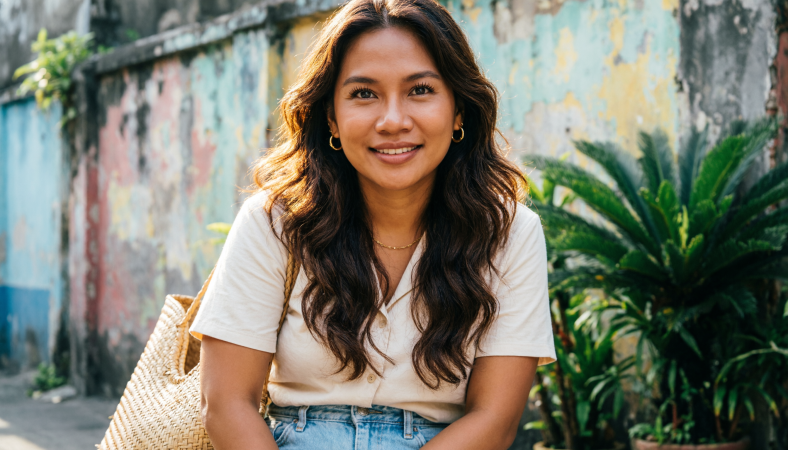
Learn something real about the Philippines before you pursue a relationship with a Filipino woman. Knowing the difference between Tagalog and Cebuano, understanding the significance of the bayanihan spirit of community cooperation, knowing what Filipino food is actually like beyond adobo — these small investments communicate genuine interest in a way that generic attraction never does. A basic effort at Tagalog phrases goes a long way in a country that genuinely appreciates the gesture.
Be clear about your intentions from reasonably early in the relationship, given the cultural context around commitment. Visit if the relationship develops — the Philippines is accessible, beautiful, and rewards genuine exploration beyond the obvious tourist circuits. Boracay and Palawan are genuinely extraordinary, but spending time in her specific city or region, meeting her family in their actual environment, tells you considerably more about the person and the relationship than any number of resort weekends.
The Bottom Line
Filipino women combine English-language accessibility, genuine warmth, deep family values, and a serious orientation toward long-term commitment in a combination that makes the Philippines one of the most rewarding destinations for Western men pursuing international relationships seriously. Engage with the culture genuinely, be honest about your intentions, and invest in understanding her specific family and background rather than treating the Philippines as a category. The relationships that come from that approach tend to be exactly what both people were looking for.