Japan produces some of the most internationally curious and internationally educated women in Asia, and the experience of dating a Japanese woman seriously is one of the more genuinely distinctive in international dating — not because Japanese women are exotic in the way that word is lazily applied to anyone from Asia, but because Japanese culture is genuinely, specifically different from Western culture in ways that require real understanding to navigate well. The communication style, the social expectations, the role of aesthetics and presentation, and the specific way that intimacy and trust develop in Japanese relationships are all worth understanding as concrete realities rather than as vague cultural background.
Geography, Cities, and the Urban-Rural Divide

Japan is an island nation of four main islands — Honshu, Hokkaido, Kyushu, and Shikoku — plus thousands of smaller islands, with a population of around 125 million concentrated heavily in urban areas. Tokyo, the capital, is one of the world’s largest metropolitan areas with nearly 14 million people in the city proper and around 37 million in the greater metropolitan area — a scale that makes it difficult to generalize about Tokyo women as a single type. Osaka, in the Kansai region, has a distinct cultural character from Tokyo — more direct, warmer, more openly humorous — that Osaka people are proud of and Tokyo people occasionally find excessive. Kyoto, also in Kansai, is the historic cultural capital of Japan, with a more traditional and formal social atmosphere that reflects its centuries as the imperial court city. Sapporo, in Hokkaido, and Fukuoka, in northern Kyushu, each have their own regional characters that distinguish them from the Kanto and Kansai centers.
Women from rural Japan tend to hold more traditional values and have less international exposure than their urban counterparts, and Japanese women who are actively pursuing international relationships are typically concentrated in the larger cities, particularly Tokyo, Osaka, and Fukuoka.
Communication, Indirectness, and What Gets Lost
Japanese communication culture is built around indirectness, implication, and the reading of unstated meaning — a tradition sometimes described through the concept of honne and tatemae, roughly translated as one’s true feelings versus one’s public presentation. In Japanese social culture, maintaining harmonious relationships often requires not saying exactly what you mean, particularly when what you mean might cause embarrassment or discomfort. This is not dishonesty but a different relationship between truth and social harmony than most Western cultures practice.
The practical implication for dating is significant. A Japanese woman who is interested in you will often communicate that interest indirectly — through attentiveness, through small gestures, through making herself available — rather than through direct verbal statement. A Japanese woman who is not interested will rarely say so directly; she will instead make herself less available, respond more briefly, and create increasing distance that a perceptive partner will recognize as signal rather than circumstance. Western men who are accustomed to direct communication and who either miss indirect signals of interest or persist past clear signals of disinterest tend to have a harder time in Japanese dating contexts than those who develop attentiveness to what is being communicated without being stated.
Aesthetics, Presentation, and What They Signal
Japan is a culture that takes presentation, aesthetics, and the quality of everyday objects and experiences extraordinarily seriously — a set of values visible in everything from the packaging of a department store purchase to the maintenance of a traditional garden to the specific way a good meal is plated. Japanese women tend to take personal presentation seriously as well, and the care put into appearance communicates self-respect and consideration for others rather than vanity in the Japanese cultural register.
This aesthetic attentiveness extends into relationships. Small, carefully considered gestures — a specific gift chosen for its personal relevance rather than its expense, punctuality as a form of respect, attention to the details of an occasion — tend to register more meaningfully in Japanese relationships than grand romantic gestures. A Western man who brings this kind of thoughtful attentiveness to a relationship with a Japanese woman is speaking a cultural language she recognizes and values.
What Japanese Women Who Date Internationally Are Looking For
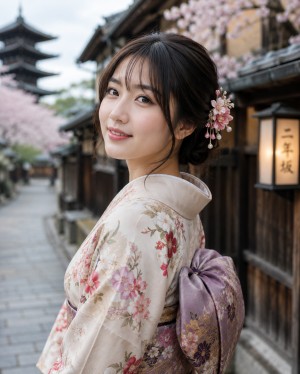
Japanese women who are actively interested in dating Western men represent a self-selected group who tend to be more internationally oriented, more comfortable with cultural difference, and more willing to navigate the communication challenges of a cross-cultural relationship than the general Japanese female population. Many speak English at a functional or fluent level, have traveled internationally, and are drawn to qualities they perceive as more common in Western men: more direct emotional expression, greater comfort with female professional ambition, and a relationship dynamic that is somewhat more egalitarian than the traditional Japanese model.
What they are not looking for, as a rule, is men who approach Japan with the surface-level fascination of anime fans or men who have constructed an imaginary version of Japanese women from media representations that bear limited relationship to actual Japanese women. Genuine curiosity about Japan — its history, its literature, its specific regional cultures, its current social changes — communicates something real. Generic enthusiasm for “Japanese culture” as an aesthetic package tends to wear thin quickly with women who actually live that culture as their daily reality.
The Bottom Line
Dating Japanese women seriously requires developing genuine attentiveness — to indirect communication, to what is expressed through gesture and presence rather than words, and to the specific aesthetic and social values of a culture that rewards thoughtfulness considerably more than intensity. The relationships that work are built on this foundation of real understanding rather than on the fascination of cultural difference, which is real but not sufficient on its own to carry a relationship very far.