Vietnam is one of Asia’s most rapidly developing countries, and the women who come from it reflect that trajectory in specific ways: hardworking, ambitious, strongly family-oriented, and entirely clear about what they expect from a serious relationship. Vietnamese women are less internationally visible in the Western dating conversation than Filipino or Thai women, partly because Vietnam’s history of restricted international contact kept the country more inward-looking than its neighbors until relatively recently. That relative obscurity works in favor of Western men who make the effort to actually understand the country and its culture, because genuine knowledge and genuine curiosity about Vietnam stand out considerably more there than in places more accustomed to Western attention.
Geography, Cities, and Regional Character
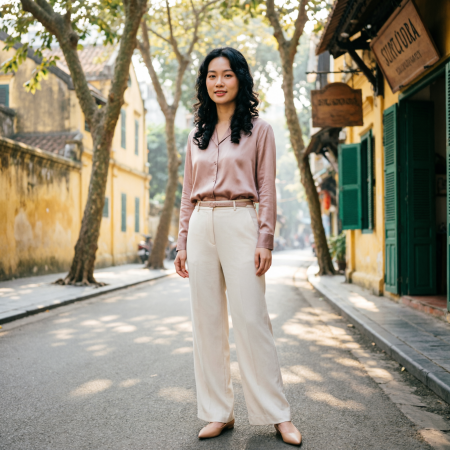
Vietnam is a long, narrow country running approximately 1,650 kilometers from north to south along the eastern edge of mainland Southeast Asia, bordered by China to the north, Laos to the northwest, and Cambodia to the southwest, with a long coastline on the South China Sea to the east. This geographic elongation has produced genuinely distinct regional cultures that Vietnamese people themselves consider meaningful — the differences between northern Vietnamese (centered on Hanoi), central Vietnamese (centered on Da Nang and Hue), and southern Vietnamese (centered on Ho Chi Minh City) are significant in terms of dialect, cultural temperament, and historical experience.
Hanoi, the capital, is the political and cultural heart of northern Vietnam — more formal, more traditional, and more influenced by the Confucian values that came through China than the south. Women from Hanoi tend to be more reserved in initial social contact, more attentive to social propriety, and more likely to have family and community expectations that are explicitly part of their decision-making around relationships. Ho Chi Minh City (still commonly called Saigon) is the commercial capital of the south — more dynamic, more internationally oriented, and carrying the specific cultural influence of its history as a French colonial city and its decades of closer contact with Western culture before reunification in 1975. Women from Ho Chi Minh City tend to be somewhat more outwardly expressive and more accustomed to international interaction than their Hanoi counterparts, though this is a tendency rather than a rule.
History, Resilience, and What It Produced
Understanding Vietnam’s recent history matters for understanding Vietnamese women. The American War (as it is known in Vietnam), the decades of post-reunification difficulty, and the economic transformation brought by the Doi Moi reforms of 1986 — which shifted Vietnam from a centrally planned to a market economy and enabled the dramatic growth that has continued since — all shaped the values and character of the women who grew up during and after these transitions. Vietnamese women have been described across generations as extraordinarily resilient, capable, and hardworking, and these qualities are genuinely characteristic rather than merely flattering.
The Confucian cultural framework that Vietnamese society inherited from centuries of Chinese influence places strong emphasis on filial piety, respect for elders, harmony within the family, and educational achievement as the primary path to social advancement. These values remain influential in contemporary Vietnamese society, particularly in the north, and shape how Vietnamese women approach relationships, family obligations, and their own personal ambitions.
Family, Face, and Relationship Expectations
Family is the central social institution in Vietnamese culture, and the expectations around family involvement in a serious relationship are real and substantial. Vietnamese women typically live with or near their parents until marriage, maintain close regular contact with extended family, and factor parental approval into significant relationship decisions in ways that are genuine rather than performative. A Western man who approaches her family with genuine warmth and respect — who makes the effort to greet her parents appropriately, who participates in family occasions, and who demonstrates through his behavior that he understands the family relationship as something that matters — makes a fundamentally different impression than one who treats the family as an obstacle to manage.
The concept of face — maintaining social dignity and avoiding public embarrassment for oneself and one’s family — is a pervasive organizing principle of Vietnamese social culture. This has practical implications for how disagreements and difficulties are handled in relationships: direct public conflict is avoided, and criticism that causes embarrassment tends to be remembered and felt deeply. Directness in the Western sense works reasonably well in private, patient conversation; public criticism or confrontation tends to cause damage that takes considerable time to repair.
What Vietnamese Women Are Looking for
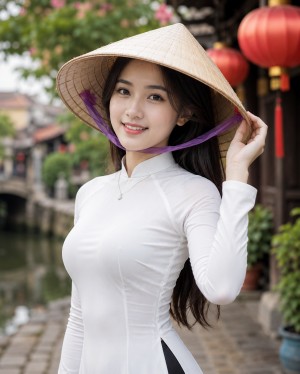
Vietnamese women who are genuinely interested in Western men tend to be looking for specific qualities: stability, genuine seriousness about the relationship’s future, and a man who demonstrates through consistent behavior rather than grand gestures that he is trustworthy. Education is highly valued — Vietnam has one of the highest literacy rates in Asia and strong female university enrollment — and intellectual engagement tends to matter to educated Vietnamese women in ways that some Western men underestimate.
The combination of professional ambition and family orientation in contemporary Vietnamese women is genuine rather than contradictory. Many Vietnamese women are building serious careers while also maintaining strong family commitments, and they are looking for partners who understand and respect both dimensions rather than expecting one to yield to the other.
The Bottom Line
Dating Vietnamese women seriously requires engaging with a culture whose combination of Confucian family values, Buddhist social temperament, and remarkable national resilience has produced women who are hardworking, loyal, and clear about what they want from a long-term relationship. Learn something real about Vietnam — its history, its regional differences, its food culture, what Doi Moi actually was and why it matters — and you will be operating from a position that very few Western men in Vietnam actually reach, which tends to be noticed and valued by the women who are worth pursuing seriously.
===